Design leadership at DevHub: from rotating tasks to a system
A design team doing everything by rotation, with no estimates, no tokens and no shared process with engineering. A year later it ran like an operation, and I moved on to lead product.
- Company
- DevHub, a multi-brand iGaming company (B2C and B2B)
- My role
- Head of UX & Product Design, then Head of Product
- Period
- Nov 2023 to Nov 2024
- Outcome
- Team from 5 to 10+, design debt down about 30% in under six months, about 30% faster design-to-development
The situation I walked into
DevHub ran four B2C brands, with a fifth in staging, plus two B2B products, and the roadmap called for two to three new brands every quarter. The design team was small and did everything by rotation: a few weeks on CRM and marketing assets, then a new brand’s design system, then incoming requests from the B2B teams.
There was no tokenisation, no agreed way to hand designs to frontend, and no estimates on any deliverable. Each morning the stand-up turned the pool of requests into whatever looked most urgent. Frontend felt design was late, and design felt there was too much work. Both were right, and neither could prove it.
- ProcessWaterfall, with no shared definition of done
- EstimatesNone on any deliverable
- SystemNo tokens or standard components
- HandoffDesign and frontend worked apart
- VisibilityWork picked in the morning stand-up
1. Knowing the team before changing the work
Before changing anything I ran an assessment of every designer: their position, strengths, tool stack, AI skills and how much frontend they understood. It showed who should own the system, who was strongest on campaign assets, and where we needed to hire. I hired six designers to fill those gaps and grew the team from 5 to 10+.
I also set up critique, mentoring, feedback and career-development routines, so the larger team improved its work instead of just producing more of it.
2. Estimates, deadlines and lean working
We standardised the work using lean principles. Each type of deliverable got an estimate and a hard deadline, so capacity planning replaced picking tasks at stand-up, and requests from other teams became visible in the queue instead of arriving as interruptions.
The first reaction was resistance: “we’re not robots, we need time to play with AI.” That was a fair point. The deadlines covered production work, and I kept room for exploration through a “build your own casino brand” exercise. Each designer proposed a new design direction without restrictions. The best one went through validation and was built.
For brand launches I built the estimate into a template. Each new brand cloned one checklist covering branding, the Figma environment, CRM journeys and promotions, sportsbook skinning, home page assets, secondary pages and components. Every line had a ticket, a status, an effort estimate for the AI-generated base art, a count of the variations needed from it, an owner, dependencies, a priority and a due date. The template also fixed the asset sizes for each channel, such as email, pop-up, inbox and CMS banners, so nobody guessed them.
| Deliverable group | Brand A | Brand B |
|---|---|---|
| Branding and direction | 3 done, 1 in progress | 3 done, 1 in progress |
| Casino UI in Figma (desktop, tablet, mobile) | 1 done, 1 in progress | 2 done |
| CRM journeys, promotions and ad-hoc campaigns | 6 done | 6 done, 1 to clarify |
| Sportsbook skin: branding, flags, icons, banners | 0 done, 5 in progress | 4 done, 1 in progress |
| Home page assets | 5 done, 1 in progress | 3 done |
| Other pages and components | 21 done, 1 in progress, 2 to do | 13 done, 1 in progress, 10 to do |
3. A multi-brand design system
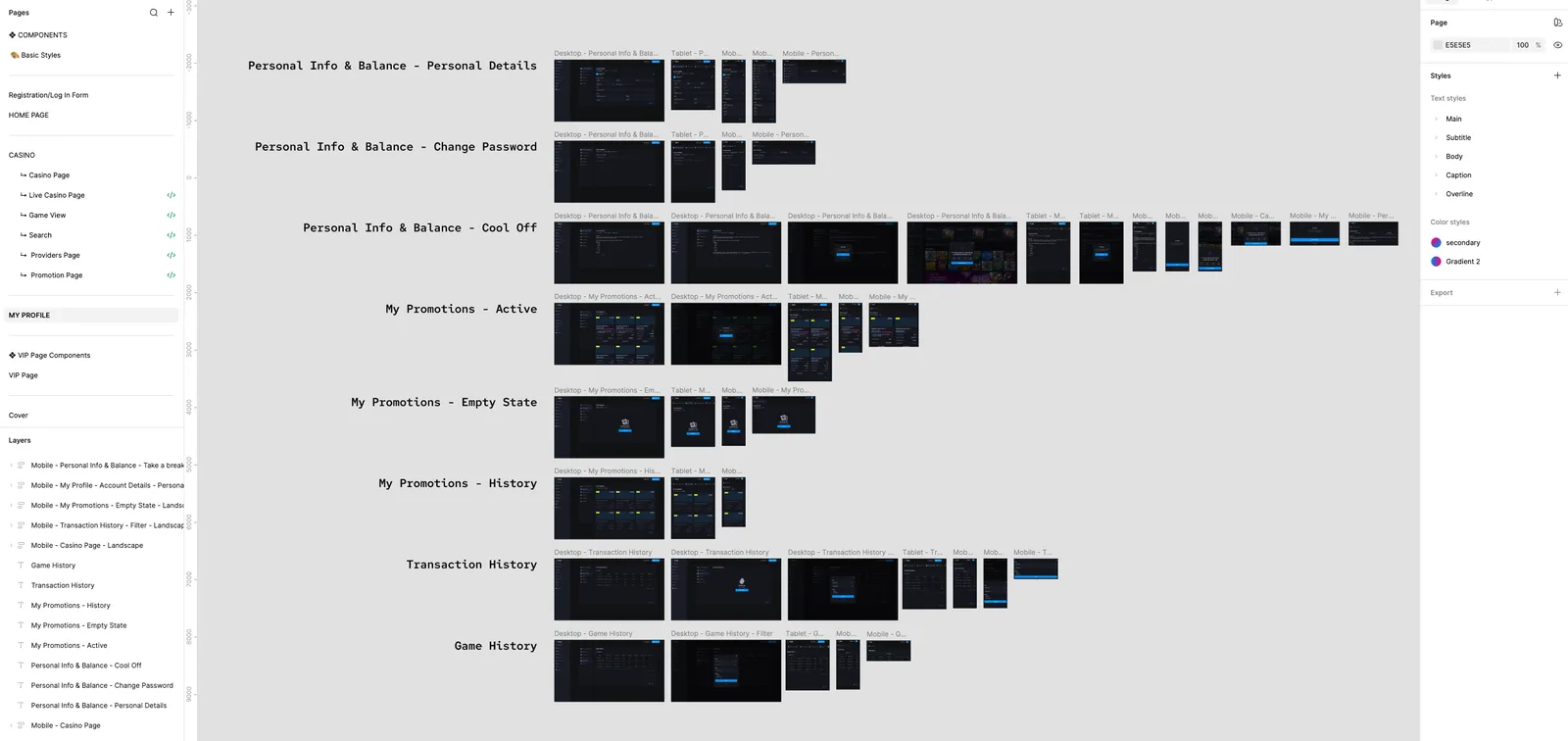
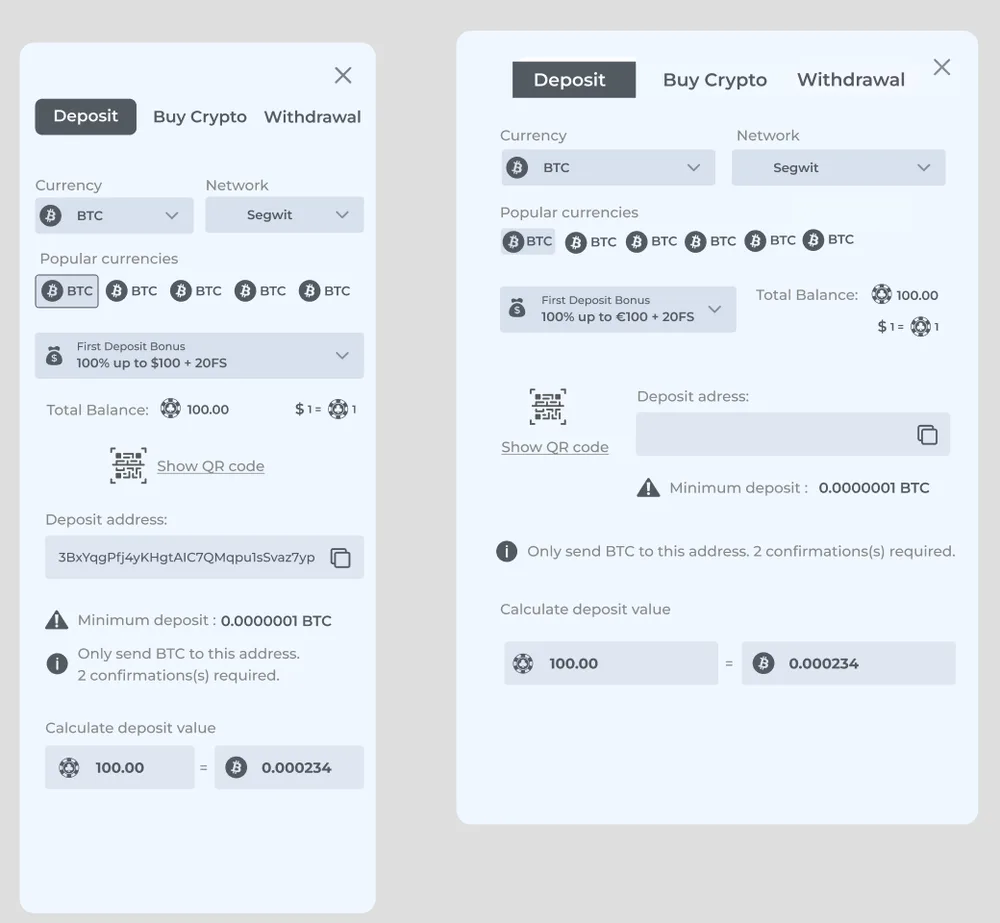
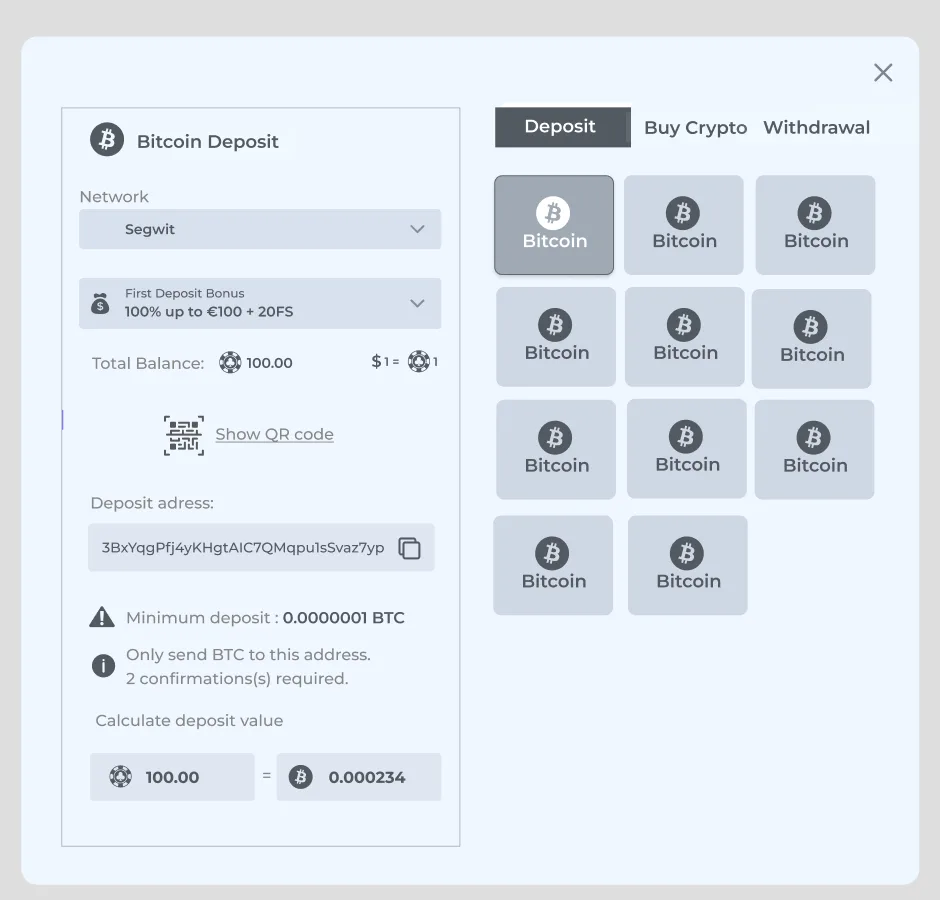
We started with four brands and, once the process held, built about twelve a year. That only worked because the system came first: design tokens, reusable components, version control and Storybook, adopted by design and engineering together.
The hardest part was the older brands. We had no time to move them to the new system, so they carried the debt. A multi-currency banner with hard-coded text, for example, had to be edited by hand across brands every time an offer changed. I assigned dedicated capacity to rebuild these properly, with tokens and standard components, so a change is made once and applied everywhere. That, together with a defined process for asset creation, is where the roughly 30% reduction in design debt in under six months came from.
4. Working with AI without losing quality
We tested the generative tools as they launched, starting with Midjourney and moving to more accurate tools as they appeared. The aim was less manual work on assets and more time for design decisions. We tested the tools against real briefs, kept the ones that held up, and made them part of the standard workflow instead of a personal habit.
5. Dual-track discovery and the data behind it
With the team stable, I moved us to dual-track discovery: research and validation running ahead of delivery, with clearer reviews and design, product and engineering working from the same plan. Design-to-development turnaround fell by about 30%.
I installed Amplitude in the first month, so that decisions started from behaviour instead of opinion. I combined it with Hotjar, GA4, customer support feedback, research and A/B testing, and used all four to find and size problems.
The funnel showed a bottleneck in registration, and the birthdate selector was where players dropped. A UI change there moved conversion from 19% to 26%. Smaller changes added up: a better bonus-selection modal and pre-defined geo location, for instance. We also A/B tested the position of the deposit button across the platform to find where it converted best.
I can’t claim any one test as the cause of the engagement and retention gains, because many changes shipped at once. What I can say is that triangulating support, analytics, research and testing moved the numbers in the right direction in a short time.
6. From Head of UX to Head of Product
I was already doing a lot of product management: prioritising, reading the analytics and working with engineering on what to build. Once the design team passed eight people and capacity, delivery times, standards and communication with engineering were stable, I was asked to step into the Head of Product role.
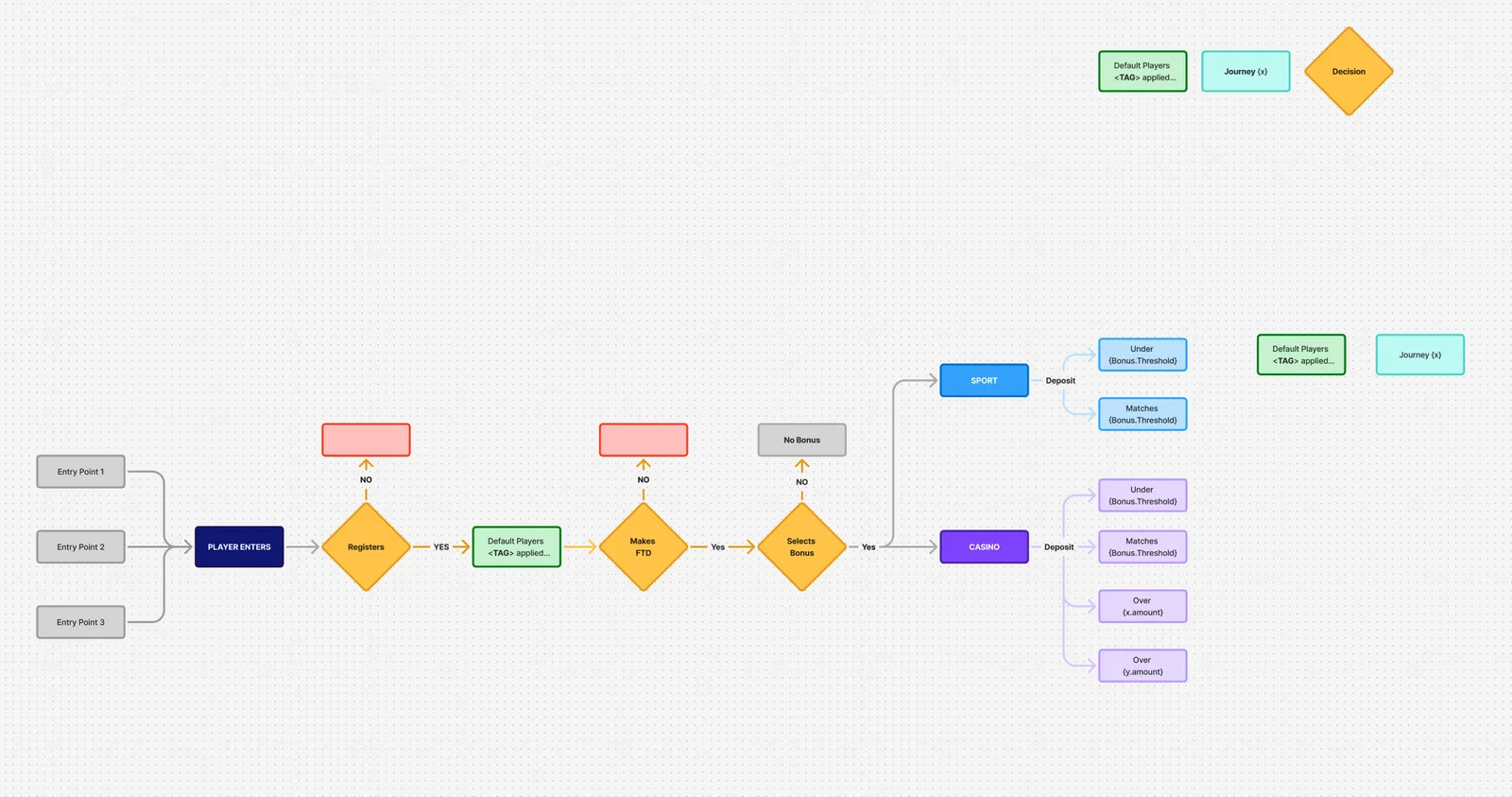
That meant designing the process for creating a new brand across every team involved: affiliate managers for the B2C brands, leadership, engineering, design, QA and others. The design-team work had shown me where handoffs break, so I could build the brand-launch workflow around those points.
- AffiliateMarket and brand brief
- LeadershipPriorities and approval
- DesignBrand, system and assets
- EngineeringImplementation
- QARelease checks
What I learned
- Make the work visible before you ask for speed.Estimates and a shared queue ended the blame between design and engineering, because both could see the same capacity.
- Design debt is a systems problem.Tokens, standard components and one process for assets removed work that individual designers could never have caught up on.
- Protect room for exploration.Leadership wanted designs that delighted, not just ones that were good enough. Fixed deadlines for production work, plus a structured way to explore, gave us both.
I took a design team from reactive to predictable, then used the same habits to organise the wider process of launching brands. I’d bring that combination to any multi-product or multi-brand business.